India–US trade deal: Tariffs remain the key hurdle, not Modi–Trump talks, says former assistant USTR
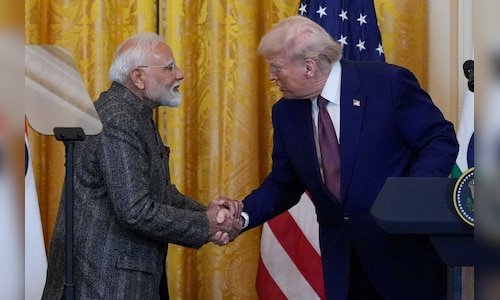
India’s stalled trade deal with the United States is being held up by unresolved tariff issues rather than the absence of a phone call between Prime Minister Narendra Modi and President Donald Trump, according to Mark Linscott, former Assistant US Trade Representative.
His remarks come amid renewed political noise in Washington following comments by US Commerce Secretary Howard Lutnick, who suggested the deal failed because Modi did not personally call Trump to seal it.
Speaking to CNBC-TV18,
Linscott said the focus on phone calls was misplaced and distracted from the real bottleneck in the negotiations. He acknowledged that Trump often plays a decisive role in closing trade agreements but stressed that substantive talks between India and the US had progressed significantly over several months through official channels.
“I think where we still have a big gap, and what is holding up more progress, is what the reciprocal tariff rate will be,” Linscott said, adding that India is seeking clarity on whether tariffs would settle closer to levels granted to the European Union.
Lutnick’s podcast comments triggered a sharp political response in New Delhi, with India’s External Affairs Ministry rejecting the characterisation of events and stating that Modi and Trump had spoken eight times in 2025, including on trade.
Former Indian Ambassador to the US Arun Singh said Lutnick’s claims were not new and reflected a long-standing divergence in perceptions between Washington and New Delhi. He argued that the India-US negotiations were originally shaping up as a balanced agreement, with concessions on both sides, but that this approach lost favour with Trump as he sought to project unilateral wins at home. Singh pointed to recent US deals with the EU, Japan and South Korea, which involved large investment and energy purchase commitments alongside tariff outcomes favourable to Washington.
According to Singh, India’s refusal to make similar unilateral concessions marked a turning point. He said the US instead opted to impose higher tariffs on India, even at the cost of straining the broader bilateral relationship. “It is not a question of whether the leaders are talking or not talking,” Singh said, arguing that domestic political optics in the US had overtaken strategic considerations. He warned that the episode had reinforced perceptions in India of the US as a coercive trading partner, prompting calls to reassess the trajectory of the relationship.
International trade policy expert Abhijit Das struck a more pessimistic note, suggesting that US demands from India continue to rise regardless of concessions already offered. He said the negotiations reflected a pattern of ever-increasing expectations from Washington, making it difficult to reach a genuinely balanced outcome. Das argued that India weakened its negotiating position by offering concessions even before talks formally commenced, including steps taken in budgets to ease trade frictions with the US.
Das said that even what US officials have described as India’s best-ever offer may still fall short of Trump’s expectations. “Whatever we put on the table, even if it’s the best offer from the Indian side, does not seem to meet the expectations of President Trump,” he said, adding that this made him doubtful about the prospects of a fair agreement.
Linscott, however, said he remained more optimistic than his Indian counterparts. He played down suggestions that the US was seeking sweeping additional concessions in sensitive areas such as agriculture and dairy in a first-phase deal, arguing that the broad contours of an agreement were already clear. “I’m bullish, and I still am quite hopeful that this can be done relatively soon,” he said, reiterating that tariffs remained the central unresolved issue.
Also Read | India stands by energy policy amid US tariff threat, rejects blame on Modi for stalled trade deal
The uncertainty has been compounded by legal challenges to Trump-era tariffs in the US Supreme Court. While a verdict could potentially strike down some levies, both Linscott and Das said the administration has alternative legal routes to reimpose tariffs under different trade laws. Das warned that even if courts rule against the government, fresh tariffs or other measures could follow, creating continued uncertainty for Indian exporters.
Taken together, the views of the three experts suggest that the India-US trade deal is less a casualty of personal diplomacy and more a reflection of hard tariff arithmetic and domestic politics in Washington. Until clarity emerges on reciprocal tariff levels and the US approach stabilises, the long-promised agreement is likely to remain stuck, regardless of how often the two leaders speak.
Watch the accompanying video for the entire discussion.










Post Comment