Defence Budget 2026: Industry seeks long-term policy clarity to scale defence manufacturing
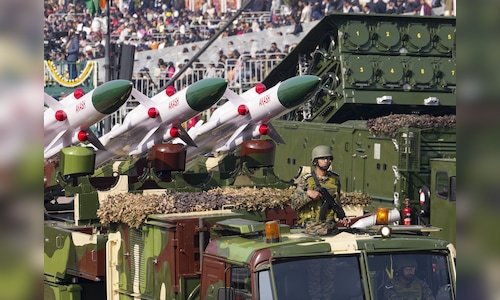
The Union Budget 2026 needs to move beyond routine fund allocations and focus on developing next-generation technologies in the defence sector to help India navigate an increasingly strategic environment marked by complex geopolitical challenges, experts said.
As the country prepares for the Budget presentation by Finance Minister Nirmala Sitharaman on February 1, experts noted that catalysing domestic defence manufacturing will require the government to address existing opportunities, regulatory bottlenecks, and the need for long-term policy continuity.
“Beyond maintaining adequate funds for modernisation and operational readiness, the budget needs to continue prioritising capital expenditure on advanced technologies such as artificial intelligence, cybersecurity, and unmanned systems, which will define future force multipliers,” said Jaijit Bhattacharya, President of the Centre for Digital Economy Policy (C-DEP).
He added that strengthening the defence industrial base would also require fiscal incentives for private sector and MSME participation, enhanced tax credits for defence research and development (R&D), and targeted support for export-oriented defence production clusters.
Investing in defence research and new technologies
Industry experts said India must increase investment in the defence R&D ecosystem to drive innovation and accelerate the development of new technologies.
“Gradually increasing R&D allocations from the current level of around 5% toward higher levels over time would help accelerate innovation. Such measures are expected to significantly reduce lifecycle costs, improve platform availability, and reinforce India’s long-term defence self-reliance,” said Vice Admiral Paras Nath (Retd), President of Crown Group Defence.
He added that higher defence allocations are also necessary for platforms that can extend India’s operational capabilities beyond its immediate waters and borders.
Satyabrata Satapathy, CEO of drone manufacturer BonV Aero, said building long-term technological depth would require refundable R&D tax credits in approved areas such as autonomy, perception, secure communications, and advanced battery systems. He also called for reimbursement support for intellectual property (IP) creation and patent filings to strengthen India’s sovereign IP base.
Drone manufacturing and scaling defence production
This will be the first Union Budget following Operation Sindoor, which highlighted India’s defence capabilities, particularly in modern warfare tactics involving drones and unmanned aerial vehicles.
To expand drone manufacturing in India, industry experts said the government must act as a principal demand generator to position the country as a global drone hub.
To achieve this, the Budget should “expand the industry incentivisation framework by introducing a PLI 2.0 scheme that rewards domestic component and UAV system manufacturers, helping create a robust domestic ecosystem while strengthening cybersecurity assurances and strategic autonomy,” said Ankit Mehta, CEO of ideaForge Technology.
Vamsi Vikas, Managing Director of Raghu Vamsi Aerospace Group, said that encouraging defence production alone is insufficient.
“What is needed today is equal attention to the sustainability of this ecosystem as it transitions from promise to performance,” he said.
“From practical experience, the most fragile phase of any defence programme is the transition from initial production to scale, when costs escalate, development timelines extend, and testing requirements increase—factors that are often underestimated,” Vikas added.
Long-term policy focus for defence manufacturing
To sustain momentum in defence manufacturing, the industry must be entrusted with greater responsibility for developing cutting-edge technologies through design-linked incentives, long-term funding visibility, and dedicated capital budgets, said Amit Mahajan, Director at Paras Defence and Space Technologies.
“Defence innovation cannot remain solely government-led. Industry must be trusted with the responsibility of developing new technologies, whether indigenously or through structured global partnerships,” he said.
Bhattacharya of C-DEP added that clear budgetary signals on long-term policy continuity, combined with predictable funding frameworks for multi-year projects, would attract sustained private and foreign investment and accelerate technology transfer.










Post Comment