Budget 2026 | PSU bank mergers, capital rule changes on the table as India aims for bigger global banks: DFS Secretary
Finance Minister Nirmala Sitharaman’s Union Budget 2026 announcement of a new expert panel on banking reforms could pave the way for sweeping changes in India’s financial sector — including a possible review of regulatory capital buffers and even further consolidation of public sector banks.
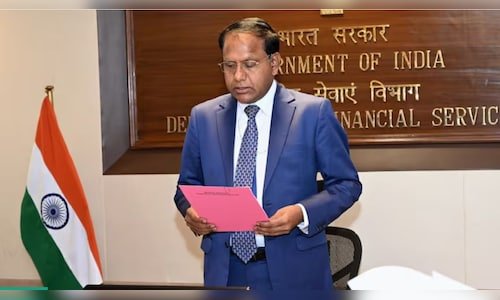
In an exclusive interview with CNBC-TV18, M Nagaraju, Secretary, Financial Services, said the proposed “Banking Committee for Viksit Bharat” will examine what kind of regulatory and institutional ecosystem India needs to ensure adequate credit flow and build globally competitive banks as the country moves towards its 2047 developed-nation goal.
A long-term banking reset for Viksit Bharat 2047
Nagaraju described the committee as a key step in “re-architecting” India’s banking system to match the scale of the economy over the next two decades.
“We wanted this expert committee to look at what kind of regulatory policy ecosystem we need to build so that adequate bank credit flows to the country, which can help India become developed by 2047,” he said.
The panel’s mandate, he indicated, will be broad and aligned with the government’s long-term vision of building a stronger financial backbone for economic growth.
Capital ratios may be reviewed for flexibility
One of the most significant signals from Nagaraju was the possibility of revisiting existing regulatory capital requirements — an area not explicitly detailed in the Finance Minister’s Budget speech.
“These ratios were fixed a long time ago, and things have changed now… there are better ways of deploying capital, and better ways of asking capital to be held in different instruments,” he noted.
A review of capital buffers could have major implications for lending capacity, banking profitability, and the sector’s ability to support India’s expanding credit needs.
PSB consolidation: ‘Nothing is off the table’
A key question emerging from the Budget announcement has been whether the committee will also explore further consolidation among public sector banks, with the aim of creating one or two large institutions capable of competing globally.
While Nagaraju said the terms of reference are yet to be finalised, he made it clear that the committee’s scope could be wide-ranging.
“We are talking about banking for Viksit Bharat 2047 — that includes everything. I don’t think anything is off the table,” he said.
He added that once constituted, the committee could recommend measures across the banking spectrum, although the final decision would rest with the government.
India’s global banking gap: No bank in the top 40
Nagaraju also highlighted India’s limited presence on the global banking stage, despite the country’s rapid economic rise.
“Not a single Indian bank is, I think, in the list of the top 40 banks,” he said.
With India expected to become the world’s third-largest economy in the near future, the absence of Indian lenders among the top global institutions underscores the need for scale, stronger balance sheets, and regulatory support.
“We are likely to become the third-largest economy… but we don’t have a bank in the top 10 — leave the top 10, even the top 20,” Nagaraju added.
Also Read | Banking reforms panel to examine need for new banks, corporate entry: DFS Secretary M Nagaraju
A major reform signal for India’s banking future
The formation of the Banking Committee for Viksit Bharat marks one of the most significant structural reform signals from Budget 2026, as India looks to deepen credit penetration, strengthen regulatory frameworks, and build globally competitive banking champions over the coming decades.
With consolidation, capital flexibility, and global scale now part of the conversation, the committee’s recommendations could shape the next phase of India’s financial sector transformation.
Watch accompanying video for entire conversation.










Post Comment